You open the invitation. It says “Black Tie Optional.” Your first thought isn’t about shoes. It’s about whether your satin abaya reads as formal enough, or if you’ll freeze in the air-conditioned ballroom. I’ve watched too many hijabi guests show up in fabric that photographs like a nightgown. This guide fixes that.
The core problem with wedding guest outfits for hijabis isn’t lack of options. It’s that most advice treats modesty and formality as opposites. They aren’t. A well-cut kaftan in duchess satin can out-dress a cocktail gown. The difference is fabric weight, structure, and knowing which dress code rules you can bend.
What Wedding Dress Codes Actually Mean for Hijabi Guests
Dress codes are instructions about formality level, not skin coverage. You don’t need to show shoulders to be black-tie. You need fabric that holds structure, a silhouette that reads intentional, and accessories that signal evening.
Black Tie / Formal
This is the easiest code to get right if you lean into heavy fabrics. Look for duchess satin, silk crepe, or velvet (for winter weddings). Avoid anything with a matte cotton finish — it photographs flat under evening lighting. A floor-length kaftan with a defined waist or a structured abaya with embellished cuffs works. The key: your outfit should have at least one element that catches light. Beaded neckline, metallic thread embroidery, or a satin hijab in a contrasting tone.
Cocktail / Semi-Formal
Shorter lengths are allowed here — but for hijabi guests, “shorter” means midi, not mini. A tailored midi dress with wide-leg trousers underneath is a strong move. Or a belted shirt dress in a luxe fabric like crepe de chine. The mistake I see most: wearing a daytime cotton maxi dress and calling it cocktail. No. The fabric is the formality signal.
Outdoor / Garden / Beach
This is where most hijabi guests overheat. You need breathability without looking casual. Chiffon and georgette are your friends — they move in the breeze and photograph well. But get a lined version. Unlined chiffon over a slip is fine for a beach walk, not for standing next to the bride’s grandmother. Also: block heels only. Stilettos sink into grass.
Fabric Rules Nobody Tells You About Wedding Guest Hijabs
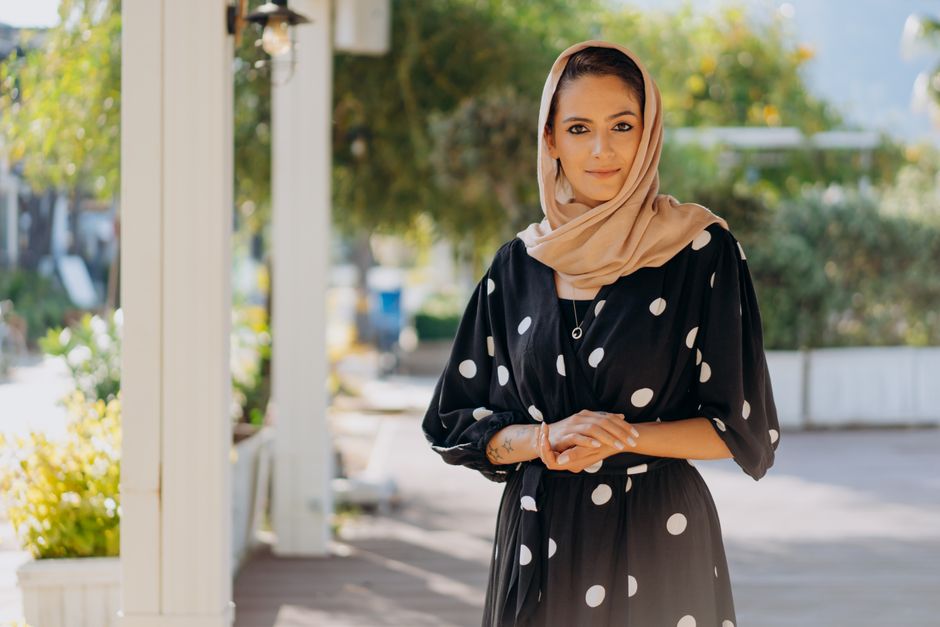
Your hijab fabric matters more than your dress fabric. It frames your face in every photo. The wrong texture can make a $400 outfit look off.
- Silk or satin hijabs: Best for evening and formal weddings. They catch light beautifully. Downside: they slip. Use a velvet or cotton undercap with grip. Sarah’s Silks and Fony Collection both make solid options under $40.
- Chiffon hijabs: The workhorse. Works for day and evening if the rest of the outfit is formal enough. Get one with a slightly textured weave — it holds shape better than slippery chiffon. Vela Scarves and Culture Hijab are reliable brands.
- Jersey hijabs: Do not wear these to a wedding. They read as gym or casual wear. Even for outdoor weddings. The only exception is if the invite explicitly says “come as you are.”
- Crinkle or pleated hijabs: Good for adding volume without bulk. But be careful — too much volume can look costume-y next to a structured dress. One pleat detail is enough.
The undercap is non-negotiable for formal events. A visible undercap edge in contrast color ruins the line. Match it to your hijab or your skin tone. I use a simple bamboo cotton undercap from Haute Hijab ($18) for everything.
Common Mistakes That Ruin Wedding Guest Hijab Outfits
These are the failure modes I see repeated at every wedding.
Mistake 1: Wearing a White or Ivory Hijab
Even if your dress is navy, a white hijab reads as bridal in photos. Especially in group shots. Unless the couple specifically requests all-white attire, avoid white, cream, and champagne hijabs. Opt for a color pulled from your dress or a metallic neutral like rose gold or pewter.
Mistake 2: Over-Accessorizing the Hijab
Brooches, pins, chains, and a headband? That’s four focal points fighting for attention. Pick one. A single pearl brooch at the shoulder or a delicate chain across the crown. Leave the rest at home. Your dress should be the statement, not the hardware.
Mistake 3: Ignoring the Venue’s Climate
Outdoor summer wedding in Texas? Velvet abaya is a heatstroke waiting to happen. Indoor ballroom in December? Chiffon with no lining will have you shivering through the toasts. Check the venue’s typical temperature. If it’s a tent, assume it’s 10 degrees colder than outside after sunset.
Mistake 4: Buying a Dress You Can’t Sit In
You will sit for dinner, for the ceremony, for speeches. A mermaid-cut skirt with no stretch looks great standing. Sitting is another story. Test it. Sit in the dressing room. Cross your legs. Reach for a glass. If anything digs or rides up, it’s not the one.
Comparison: Abaya vs. Kaftan vs. Dress + Trousers for Weddings
| Option | Best For | Fabric Sweet Spot | Risk Factor | Typical Price Range |
|---|---|---|---|---|
| Structured Abaya | Black tie, winter, conservative venues | Duchess satin, crepe, velvet | Can look shapeless if not tailored | $120–$400 |
| Kaftan | Formal, summer, outdoor evening | Silk, lined chiffon, georgette | Too casual if fabric is thin | $80–$350 |
| Midi Dress + Wide-Leg Trousers | Cocktail, semi-formal, modern venues | Crepe, crepe de chine, ponte | Proportion can look off if lengths clash | $90–$300 |
| Maxi Skirt + Embellished Top | Garden, beach, daytime | Linen blend, chiffon, cotton silk | Top can ride up when sitting | $70–$250 |
My verdict: for most weddings, a lined kaftan in a mid-weight fabric is the safest high-formality choice. It gives you the length and coverage of an abaya without the shapelessness risk, and it works across more dress codes than a structured abaya does. If the invite says black tie, upgrade to a structured abaya with defined shoulders or a belted waist.
Color Strategy for Wedding Guest Hijab Outfits
Color is where most hijabi guests play it too safe. All-black is fine, but it can read as mourning at a daytime garden wedding. All-pastel can read as bridesmaid if it matches the wedding palette.
The rule I follow: rich jewel tones for evening, muted earth tones for daytime, and one metallic accent for either. Emerald, sapphire, burgundy, and forest green photograph beautifully under both natural and artificial light. For daytime, terracotta, dusty rose, sage, and taupe work without washing out.
Stay away from: white, ivory, champagne, blush pink (too bridal-adjacent), and anything neon. Also avoid wearing the exact color of the bridesmaids if you know it — you don’t want to look like a lost member of the wedding party.
If you only own one formal hijab, make it a pewter or taupe satin. It pairs with jewel tones, earth tones, and black. It’s the most versatile formal hijab color I’ve found, and it doesn’t compete with any dress color.
What to Wear When the Wedding Is Casual or Unspecified
No dress code on the invite? That’s a trap. It usually means “semi-formal but we didn’t want to sound demanding.” The safe move is to dress one notch above what you think is expected. You can always remove a blazer or statement jewelry to tone down. You can’t add formality you didn’t bring.
For a casual wedding, a midi dress in a substantial fabric with a matching hijab is the sweet spot. Think: a crepe midi from Aab or a belted shirt dress from Modanisa. Add a structured bag and block heels. Skip anything you’d wear to brunch with friends — this is still a wedding, and there will be photos.
For an unspecified evening wedding, default to the cocktail rules above. A satin kaftan or a tailored maxi with a metallic clutch will never be wrong.
Final Verdict: The One Outfit Formula That Works for Almost Any Wedding
If I had to give one outfit formula that covers 80% of wedding invitations, it’s this: a floor-length kaftan or maxi dress in a jewel tone or muted earth tone, made from lined chiffon, crepe, or satin, paired with a matching or metallic hijab in silk or satin, a structured clutch, and block heels or low stilettos that you’ve already walked in for an hour.
That formula works for black tie optional, cocktail, garden, and unspecified dress codes. The only time it fails is a true white-tie event — and if you’re invited to one of those, you already know you need a custom gown.
Stop overthinking the coverage. Focus on fabric weight, color discipline, and one intentional accessory. That’s the difference between looking like a guest and looking like you got the memo.