Are you buying a serum or buying a story about sleep?
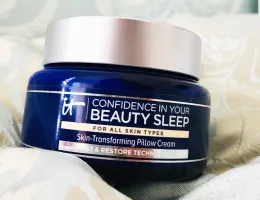
That question drives most purchasing mistakes in nighttime skincare. The It Cosmetics Confidence in Your Beauty Sleep serum ($48) sits in a segment flooded with marketing language and limited transparency. Evaluated the way an independent analyst would — ingredient list first, brand narrative second — it holds up better than most at this price point. But it is not the right coverage for every skin profile. Understanding the exclusions matters as much as understanding the benefits.
Results vary significantly by skin type, climate, and individual factors. This review names the specific scenarios where this product earns its premium and the situations where it doesn’t.
What Your Skin Actually Does During Sleep
This is not a metaphor. Skin undergoes measurable biological changes between roughly 10 PM and 2 AM that have direct implications for how nighttime skincare products work — and which formulas actually justify their price tag.
Cortisol levels drop during sleep. That matters because cortisol suppresses inflammatory pathways during the day, but it also slows cellular repair. When cortisol falls overnight, skin cell turnover accelerates and collagen synthesis increases. Blood flow to the dermis rises. The skin runs a maintenance cycle it cannot complete while you’re upright and metabolically occupied with being awake.
The TEWL Problem Nobody Mentions Clearly
Transepidermal water loss — the rate at which moisture evaporates through the skin barrier — increases when cortisol drops overnight. Your barrier is more permeable during sleep than during the day. In dry or low-humidity climates, this effect is significantly more pronounced. People in arid environments or anyone running indoor heat in winter lose measurably more moisture overnight than those in humid regions. Your local environment is a real variable in how much hydration support your nighttime routine needs — not a marketing disclaimer, an actual physiological difference.
This is why skin feels tighter in the morning than when you went to bed, even after applying moisturizer. The moisturizer slowed the loss. It didn’t stop it.
What a Legitimate Nighttime Formula Should Address
To match the skin’s actual overnight needs, a nighttime serum should cover at least two of three functional areas:
- Hydration replenishment — counteracting TEWL through humectants like hyaluronic acid or glycerin that draw water to the skin surface
- Cellular repair support — peptides, antioxidants, or retinoids that support the collagen production already happening during sleep
- Barrier reinforcement — ceramides, fatty acids, or niacinamide that reduce overnight permeability at the structural level
Products that hit all three at meaningful concentrations are rare. Most hit one clearly, gesture at a second, and leave the third unaddressed. That’s not an automatic disqualifier — but it determines which product is right for which person.
The Confidence in Your Beauty Sleep Serum — Assessed
This serum’s primary function is hydration. Its secondary benefit is peptide support for overnight skin repair. It does not address exfoliation, hyperpigmentation, or significant textural improvement — and if those are your actual concerns, this is not the right policy.
The formula centers on hyaluronic acid as the lead active, supported by a peptide complex and skin-conditioning agents. The texture is lightweight — closer to a watery gel than a traditional serum — which makes it functional for combination and oily skin types that find heavier overnight formulas too occlusive or pore-clogging.
At $48 for 1 oz, it sits in the mid-premium tier. Below the $85 Sunday Riley Good Genes or $90 Drunk Elephant T.L.C. Framboos Glycolic Night Serum. Comfortably above the drugstore bracket. Consumer satisfaction data from Sephora shows consistently strong marks for texture and hydration results specifically — which aligns with what the formula actually does. Dermatologist-tested claims hold in context: this is not a high-irritant formula, and for a product used every single night, tolerability is a long-term performance metric, not a bonus.
Where It Fits the Broader It Cosmetics Confidence Line
It Cosmetics built the Confidence line around tolerability. The Confidence in a Cream ($38) earned its consumer following specifically because it doesn’t trigger breakouts or sensitivity reactions across a wide skin type range — technically harder to achieve than its price suggests. The Beauty Sleep serum follows the same philosophy: low fragrance load, minimal irritant potential, predictable nightly performance. For anyone who’s had adverse reactions to trendier actives — AHA/BHA peeling, retinol dryness, vitamin C oxidation — this is a lower-risk entry point into a serious overnight routine.
Four Mistakes That Make Any Nighttime Serum Underperform
A well-formulated serum misapplied produces mediocre results. The following four errors account for the majority of complaints in consumer reviews across this entire product category — and none of them are the serum’s fault.
- Applying serum after moisturizer. Serums are formulated to contact skin directly. A moisturizer applied first creates a physical barrier that blocks absorption. Serums go on clean skin, before heavier creams — always.
- Skipping thorough cleansing. Sunscreen, pollution residue, and makeup form a film that prevents active ingredients from reaching the dermis. A serum applied over that film isn’t penetrating — it’s sitting on debris. Double cleansing, or at minimum a hybrid cleanser that handles oil and water-soluble residue in one pass, removes the barrier that blocks your serum from working.
- Using too much product. Three to four drops cover the full face and neck. Applying more does not increase efficacy — it increases irritation risk and burns through the bottle faster. Serum concentration is calibrated for precise, thin-layer application.
- Stopping at the jawline. The neck loses collagen measurably faster than the face. Every product applied to your face should extend to the décolletage. It takes five extra seconds and changes long-term outcomes significantly.
Tip: Set a three-to-five-minute wait between serum and moisturizer. It feels excessive the first week. By week three, you’ll notice the difference in absorption and the end of pilling.
Nighttime Serum Comparison: Coverage at Each Price Point
No single product is the right choice for every skin profile. The table below compares the It Cosmetics Confidence in Your Beauty Sleep against four commonly evaluated alternatives across key performance dimensions. Prices are approximate and vary by retailer.
| Product | Price | Primary Function | Best Skin Type | Irritation Risk | Contains Retinol |
|---|---|---|---|---|---|
| It Cosmetics Confidence in Your Beauty Sleep | $48 / 1 oz | Hydration + peptides | Dry, combination, sensitive | Low | No |
| CeraVe Skin Renewing Night Cream | ~$18 / 1.7 oz | Barrier repair (ceramides) | Dry, compromised barrier | Very low | No |
| It Cosmetics Hello Results Retinol Serum | $39 / 1 oz | Anti-aging (retinol) | Fine lines, oily skin | Moderate | Yes |
| Sunday Riley Good Genes | $85 / 1.7 oz | Exfoliation (lactic acid) | Hyperpigmentation, dull tone | Moderate | No |
| Drunk Elephant T.L.C. Framboos | $90 / 1 oz | AHA/BHA exfoliation | Textured, congested skin | High for new users | No |
The CeraVe Skin Renewing Night Cream handles pure barrier repair at roughly one-third the cost. If your skin’s primary overnight need is maintaining a healthy moisture barrier — not boosting hydration or adding peptide support — that’s the more cost-effective coverage. Sunday Riley Good Genes earns its premium specifically for hyperpigmentation and uneven tone; it operates in an entirely different functional category. The It Cosmetics Hello Results Wrinkle-Reducing Daily Retinol Serum-in-Cream ($39) addresses aging concerns more directly than the Beauty Sleep serum does, and costs less. If fine lines or wrinkles are your primary concern, compare both side by side before committing. Get samples of each. Committing to a full bottle without a trial run is consistently the most expensive mistake in this product tier.
How to Build a Nighttime Routine Around This Serum
Step 1 — Cleanse Completely
Oil-based cleanser first to remove SPF and makeup at the lipid level, followed by a water-based or gel cleanser to remove sweat and water-soluble debris. If two-step cleansing feels like too many steps, a hybrid formula that handles both in one pass is a workable substitute. The goal is clean skin contact — not a specific product count.
Step 2 — Optional Hydrating Toner or Essence
A lightweight watery toner applied before your serum increases absorption by prepping the skin surface. Not required. But if your skin consistently feels dehydrated even after a full routine, this step often resolves it without changing anything else. Skip it if your current routine is already working.
Step 3 — Apply the Serum
Three to four drops. Press into skin with palms rather than rubbing. Wait three to five minutes before the next step. That wait time determines whether the serum penetrates or simply sits on the surface — it’s the most skipped and most consequential step in most people’s routines.
Step 4 — Moisturizer or Night Cream
Seals in the serum and adds a second hydration layer. For oily skin, a lightweight gel moisturizer is sufficient. For dry skin, a richer cream locks in more of what the serum deposits. The two-layer system — serum draws water in, cream seals it — consistently outperforms either product used alone for genuinely dry skin types. Each layer serves a different mechanical function.
Total routine time is 8 to 12 minutes. Consistency is the actual performance variable. The people who see results are the ones who don’t skip Wednesday.
Who Should Not Use This Serum
Is it suitable for acne-prone skin?
The formula is non-comedogenic and fragrance-free, which eliminates two of the most common triggers for breakout reactions when introducing new products. That said, if your skin is actively inflamed or breaking out, adding any new variable complicates diagnosis. Stabilize your skin first, then introduce the serum as a single controlled addition so you can evaluate results accurately.
Can it be layered with retinol?
Yes — but sequencing determines the outcome. Apply retinol first on dry skin and let it absorb fully, at minimum 20 to 30 minutes, before adding the hyaluronic acid serum. Applying a humectant directly over retinol before absorption can drive the retinol deeper into the dermis than the formula intends, increasing irritation and peeling risk measurably. If you’re combining both for the first time, start on alternate nights rather than nightly until you know how your skin responds. Individual sensitivity varies.
Does it add value if you already use Confidence in a Cream?
Possibly not for every skin type. The It Cosmetics Confidence in a Cream ($38) already delivers significant hydration. Adding the Beauty Sleep serum creates a two-layer system where the serum pulls water toward the skin and the cream seals it in — a combination that outperforms either product alone for very dry skin. For normal or oily skin, the cream alone likely covers the hydration need without the additional cost. Be honest about your skin’s actual baseline dryness before deciding whether the serum fills a real gap or just adds to the spend.
Does climate change the value calculation?
Yes — and this matters more than most product reviews acknowledge. In humid climates, overnight transepidermal water loss is naturally lower, which means your skin needs less active hydration support. In dry or desert climates, or during winter heating season in any climate, TEWL is elevated and the serum addresses a more meaningful need. Regional environment affects whether this serum is a smart investment or a redundant one. It’s a real factor, not a fine-print disclaimer.
The Coverage Verdict
For dry to combination skin where hydration is the primary overnight concern, the It Cosmetics Confidence in Your Beauty Sleep serum delivers credible, consistent results at a defensible mid-range price. It is not a retinol replacement. It is not an exfoliant. It is not worth the premium over CeraVe if barrier repair is your actual need.
If anti-aging is the priority, the It Cosmetics Hello Results retinol serum addresses that category more directly. If uneven skin tone is the concern, Sunday Riley Good Genes operates in a different functional lane entirely. Skin type, climate, and the specific gap in your existing routine determine whether this product adds real coverage or just adds a line item.