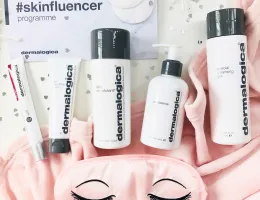
You’ve seen the white bottles on every esthetician’s shelf. You’ve heard the claims — “professional-grade,” “results-driven,” “no fragrance.” But is Dermalogica actually worth the $40 to $80 per product? Or is this just another brand that works for the Instagram models but not for normal people with normal skin?
I spent six months testing Dermalogica products across three different skin types — my own oily-combination skin, my partner’s dry-sensitive skin, and a friend’s acne-prone skin. Here’s what I learned, what I’d buy again, and what I’d skip.
What Dermalogica Actually Does (And Doesn’t Do)
Dermalogica started in 1986 as a professional-only brand for estheticians. The core philosophy is simple: strip out the irritants (essential oils, lanolin, artificial fragrance) and focus on active ingredients that actually change your skin. That’s why every product says “fragrance-free” on the label.
But here’s the thing — being fragrance-free doesn’t mean gentle. Dermalogica uses sodium lauryl sulfate (SLS) in several cleansers, including their best-selling Special Cleansing Gel ($40, 16.9 oz). SLS is a strong surfactant that can strip moisture if you have dry skin. My partner’s face felt tight after using it for three days. We switched to the UltraCalming Cleanser ($42, 16.9 oz), which uses a gentler coconut-based cleanser, and the tightness disappeared.
The real value of Dermalogica is consistency. Every product has a specific job, and they work together as a system. You can’t just grab one product and expect miracles. The brand is designed for people who want a routine, not a single fix.
That said, the prices hurt. A full routine — cleanser, exfoliant, serum, moisturizer — runs about $180 to $250. That’s more than drugstore brands like CeraVe or La Roche-Posay. But it’s less than luxury brands like SkinCeuticals or Drunk Elephant. Dermalogica sits in the middle: professional-grade without the luxury markup.
The 3 Products I’d Buy Again (And the 2 I’d Skip)
After six months, I have strong opinions. Here’s the breakdown.
Buy: Daily Microfoliant ($58, 2.6 oz)
This is the product that made me a believer. It’s a rice-based powder that activates with water. You pour a little in your palm, add water, rub your hands together, and apply. The particles are small enough that you don’t feel like you’re scrubbing your face with sand. It contains salicylic acid and papain (an enzyme from papaya) to dissolve dead skin cells without manual scrubbing.
I used it every other day for two months. My pores looked smaller. My skin texture smoothed out — the little bumps on my forehead disappeared. My partner, who has rosacea, tried it once and her face turned red for a day. So this is not for sensitive or reactive skin. But for normal to oily skin? It’s the best physical exfoliant I’ve ever used.
Buy: Skin Hydrating Masque ($55, 2.5 oz)
I was skeptical of a $55 mask. But this one delivers. It’s a gel-cream formula with hyaluronic acid, aloe, and cucumber extract. You leave it on for 10-15 minutes, then rinse. My skin felt plump and cool afterward — like I’d just had a facial. It’s not a dramatic “wow” product, but it’s reliable. I use it after flights or when my skin feels tight from winter air.
One downside: the tube is small. At 2.5 oz, it lasted me about 12 uses. That’s $4.58 per use. For a weekly mask, that adds up. But I haven’t found a drugstore dupe that feels as good.
Buy: Special Cleansing Gel ($40, 16.9 oz)
If you have oily or combination skin, this is your cleanser. It’s a clear gel that foams up nicely. It removes makeup and sunscreen without leaving a residue. The SLS concern is real — my dry-skinned partner couldn’t use it — but for my oily T-zone, it was perfect. One bottle lasted four months. At $40, that’s $10 per month. Cheaper than most drugstore cleansers per use.
Skip: Powerbright TRx System ($195 for three products)
This is Dermalogica’s brightening line: a serum, a moisturizer, and a night treatment. I used it for three months. The serum has niacinamide, vitamin C, and hexylresorcinol — good ingredients. But the moisturizer is thick and pilled under makeup. The night treatment is a gel that dried down sticky. My skin didn’t look noticeably brighter. My friend who tried it said the same thing. For $195, you can get a better vitamin C serum from Timeless ($25) or Maelove ($28).
Skip: Active Moist ($42, 1.7 oz)
This is Dermalogica’s lightweight moisturizer for oily skin. It’s fine — it moisturizes without being greasy. But it’s $42 for 1.7 oz, which is expensive for a basic moisturizer. The ingredient list is short: water, glycerin, dimethicone, a few extracts. No actives. You can get the same thing from CeraVe PM ($16, 3 oz) for a quarter of the price. Save your money.
How to Build a Dermalogica Routine That Actually Works
Don’t buy everything at once. Start with the products that address your biggest skin concern. Here’s the order I recommend.
Step 1: Cleanse — But Choose Wisely
If you have oily or combination skin: Special Cleansing Gel ($40). If you have dry or sensitive skin: UltraCalming Cleanser ($42). Use morning and night. Wet your face, pump once, massage for 60 seconds, rinse with lukewarm water. Don’t use hot water — it strips your skin’s barrier.
Step 2: Exfoliate — 2-3 Times Per Week
Daily Microfoliant ($58) is the MVP here. Use it 2-3 times per week, not every day despite the name. Pour a dime-sized amount into dry palms, add a few drops of water, rub hands together to create a paste, then massage onto damp skin for 30 seconds. Rinse thoroughly. Do not scrub hard — let the ingredients do the work.
Step 3: Moisturize — Match Your Skin Type
For oily skin: skip Active Moist. Use Sebum Clearing Gel ($48) instead. It has salicylic acid and niacinamide to control oil. For dry skin: Skin Smoothing Cream ($52) is richer and contains shea butter. For normal skin: Calm Water Gel ($48) is a lightweight gel-cream that hydrates without heaviness.
Step 4: Add a Treatment — Only If Needed
If you have acne: Clearing Skin Kit ($75 for three products) includes a spot treatment and a serum with benzoyl peroxide and salicylic acid. If you have dark spots: Powerbright Serum ($85) on its own — skip the full system. If you have redness: UltraCalming Serum ($62) with oat and niacinamide.
Common Mistakes People Make With Dermalogica
I made most of these myself. Learn from my failures.
Mistake 1: Using too many products at once. Dermalogica has 50+ products. I bought five at once and my skin freaked out — breakouts, redness, the works. Start with two products max. Add one new product every two weeks. Your skin needs time to adjust.
Mistake 2: Over-exfoliating. The Daily Microfoliant is gentle, but it’s still an exfoliant. Using it every day with a toner that has AHAs or BHAs will destroy your moisture barrier. I did this for two weeks and my skin became shiny, tight, and painful. Stick to 2-3 times per week for exfoliation, and don’t combine with other actives on the same day.
Mistake 3: Ignoring your skin type. The Special Cleansing Gel is great for oily skin, terrible for dry skin. The Skin Smoothing Cream is great for dry skin, terrible for acne-prone skin. Don’t buy a product just because a YouTuber with different skin than yours recommends it. Read the product description. If it says “for oily skin” and you have dry skin, skip it.
Mistake 4: Expecting overnight results. Dermalogica is not a miracle brand. The Daily Microfoliant took three weeks to show texture improvement. The UltraCalming line took four weeks to calm redness. If you want instant gratification, get a facial. If you want long-term change, be patient.
When Dermalogica Isn’t the Right Choice
I’m a fan, but I’m not a shill. Dermalogica isn’t for everyone. Here’s when you should pick something else.
If you have extremely sensitive or allergic skin: Dermalogica’s fragrance-free formula is better than most, but it still uses essential oils in some products (like the PreCleanse balm, which has eucalyptus oil). My partner with rosacea reacted to three products before we found the UltraCalming line. If your skin reacts to everything, try Vanicream or Avene instead — they’re even more stripped down.
If you’re on a tight budget: Dermalogica is $40-$80 per product. A full routine costs $200+. For the same money, you can get a full routine from The Ordinary or Inkey List for under $60. The ingredients won’t be as elegant, but they’ll work similarly. Dermalogica’s advantage is the texture and the overall experience — not magic ingredients.
If you want anti-aging results: Dermalogica has retinol products (the Retinol Clearing Oil, $62), but they’re not as strong or as well-formulated as prescription retinoids or even drugstore options like Neutrogena Rapid Wrinkle Repair. For anti-aging, save your money for a dermatologist-prescribed tretinoin (about $30 with insurance) and use a basic moisturizer.
If you have acne that’s not responding to over-the-counter products: Dermalogica’s Clearing line works for mild to moderate acne. But if you have cystic acne or acne that doesn’t improve after 8 weeks, see a dermatologist. You need prescription-strength treatments (clindamycin, tretinoin, spironolactone). No skincare brand can replace a doctor.
How Dermalogica Compares to Other Professional Brands
I tested three brands in the same price range. Here’s the quick comparison.
| Brand | Price Range | Best For | Worst For |
|---|---|---|---|
| Dermalogica | $40-$80 per product | Texture, pores, oily skin | Dry, sensitive, budget-conscious |
| PCA Skin | $45-$95 per product | Anti-aging, pigmentation | Acne, oily skin (too heavy) |
| iS Clinical | $60-$150 per product | Post-procedure, healing | Everyday use (too expensive) |
| SkinCeuticals | $70-$180 per product | Vitamin C, antioxidants | Budget, simple routines |
Dermalogica wins for texture improvement and pore refinement. PCA Skin wins for anti-aging (their retinol is stronger). iS Clinical wins for post-laser or post-peel healing. SkinCeuticals wins for vitamin C (their C E Ferulic is the gold standard).
If your main concern is rough texture, clogged pores, or oily skin, start with Dermalogica. If you’re worried about wrinkles or sun damage, PCA Skin or SkinCeuticals might be better. If you just had a facial or laser treatment, iS Clinical is worth the splurge.
My Final Verdict After 6 Months
I still use Dermalogica. Not every product, but the ones that work. The Daily Microfoliant is a permanent part of my routine. The Skin Hydrating Masque lives in my bathroom cabinet for bad skin days. The Special Cleansing Gel is my go-to morning cleanser.
But I also use a $16 CeraVe moisturizer. And a $25 Timeless vitamin C serum. And a prescription tretinoin that costs $10 with insurance. Dermalogica isn’t a complete skincare solution — it’s a tool for specific problems. Texture. Pores. Oil control. For those problems, it’s excellent.
So if you’re testing out Dermalogica, start small. Buy the Daily Microfoliant and one cleanser. Use them for a month. If your skin looks better, add one more product. If it doesn’t, return them — Dermalogica has a 30-day return policy. You don’t need to buy the whole system to see if it works for you.
That’s the honest truth from someone who spent $400 to find out. Start with $58. See what happens.