
Low rise wide leg pants fail on most people not because of body shape, but because of a single measurement most shoppers never check: the front rise. A standard mid rise sits between 9 and 11 inches. A true low rise sits between 7 and 8.5 inches. That two-inch difference shifts where the waistband hits your hip bones, and if your torso is longer than average, the pants will pull at the crotch and gape at the back no matter what size you buy.
This article breaks down the actual numbers behind low rise wide leg pants: which rise measurements work for which torso lengths, which fabrics hold the silhouette, and which shoes prevent the dreaded fabric-puddle effect. No product links. Just fit math.
The Rise Measurement That Decides Everything
Rise is the distance from the crotch seam to the top of the waistband. Most brands list it in product specs, but few shoppers know what to do with it. Here is the practical breakdown:
| Rise Measurement | Where It Sits | Who It Works For | Common Problem |
|---|---|---|---|
| 7–8 inches | Below hip bones, true low rise | Short-to-average torso (under 18 inches from shoulder to hip) | Back gaping on long torsos |
| 8–9 inches | At hip bones, modern low rise | Average torso (18–20 inches) | Still pulls if you carry weight at the hip |
| 9–10 inches | Just below navel | Long torso (20+ inches) | Reads as mid rise, loses the low-rise look |
Measure your torso before ordering. Put a measuring tape at the top of your shoulder, run it down your front over your bust, and stop at the point where you want the waistband to sit. If that number exceeds 20 inches, a 7-inch rise will not work. You need 8.5 inches minimum or the pants will sit too low and shorten your legs visually.
Why the Back Rise Matters More Than the Front
The back rise — from crotch seam up the back to the waistband — is usually 2 to 3 inches longer than the front rise. On low rise pants, that difference shrinks. This is why low rise pants gap at the back when you sit down. The solution is not sizing down. The solution is looking for a curved waistband or a back rise that measures at least 12 inches on a size 27. Brands like AGOLDE and Citizens of Humanity cut their low rise styles with a more curved back waistband for exactly this reason.
Fabric Weight: The Difference Between Drape and Collapse
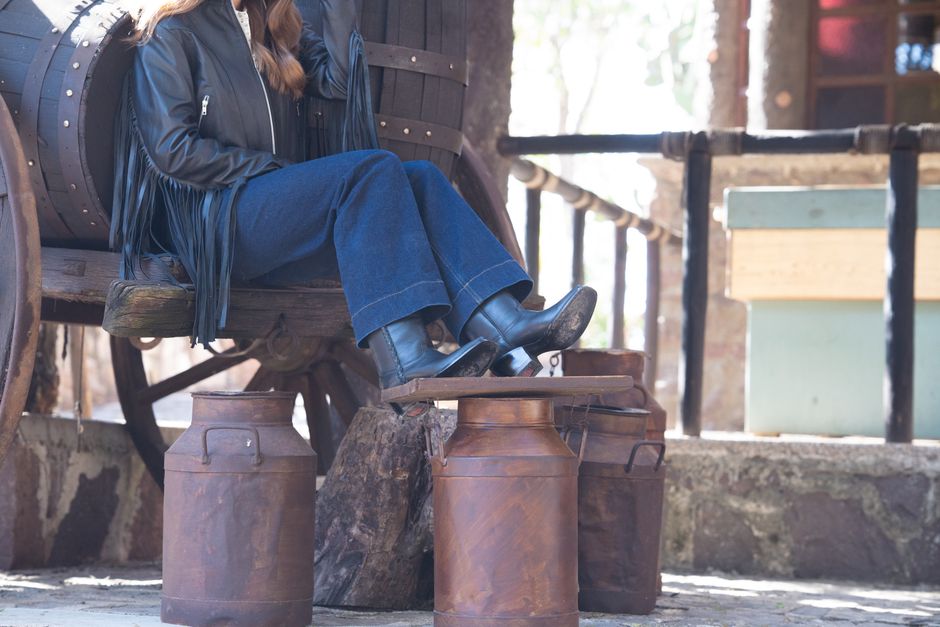
Wide leg pants live or die by fabric. Too light, and the legs collapse against your body, turning a wide silhouette into a sad straight leg. Too heavy, and the pants look like upholstery. The sweet spot for low rise wide leg pants is between 8 and 12 ounces per square yard.
- 8–10 oz denim: The standard for low rise wide leg jeans. Levi’s Ribcage Wide Leg uses approximately 9.5 oz denim. Enough structure to hold the flare, light enough to drape at the hip.
- 6–8 oz linen or cotton twill: Good for summer trousers. The Frankie Shop Bea Wide Leg Pant uses a cotton-blend twill around 7 oz. Drapes well but wrinkles fast.
- 12+ oz rigid denim: Holds the widest silhouette but feels stiff at a low rise. The stiffness fights the natural hip curve and creates a barrel effect on curvier bodies.
- Anything under 6 oz: Avoid. Rayon challis, thin viscose, and cheap polyester jersey will cling to your thighs and destroy the wide leg shape within an hour of wear.
My pick for the most forgiving fabric: a 9–10 oz cotton twill with 2–3% elastane. The slight stretch prevents crotch pulling on a low rise, while the twill weave holds the leg shape. Uniqlo’s Wide Fit Pleated Pants sit in this range and consistently hold their silhouette after 10+ washes.
Why Low Rise Wide Legs Look Wrong With the Wrong Shoes
Here is the rule most people miss: the wider the leg opening, the more shoe you need. A 22-inch leg opening swallows a ballet flat. The fabric hits the top of the shoe and breaks the line, making your legs look like they end in a puddle.
For a 20–22 inch leg opening, you need at least a 1.5-inch platform or heel. A chunky loafer works. A pointed-toe boot works. A bare flat does not.
For a 24+ inch leg opening, go platform. Think Dr. Martens Jadon boots with a 1.75-inch platform, or a 2-inch block heel. The extra height lifts the hem off the ground and restores the vertical line that low rise pants inherently shorten.
If you refuse to wear heels, hem the pants to graze the floor in your tallest flat sneakers. A pair of Nike Air Force 1s adds about 1.2 inches of height. That is enough to make a 22-inch opening work.
When Low Rise Wide Legs Are the Wrong Choice

Do not buy low rise wide leg pants if you have a hip-to-waist ratio under 0.7. Here is the math: measure your waist at the narrowest point, then measure your hips at the widest point. Divide waist by hips. If the number is under 0.7, you have a significant waist-to-hip curve. Low rise pants sit below the narrowest point of your waist, which means they sit on the widest part of your hip. The waistband has to be larger to fit your hips, which creates a gap at your natural waist. The wide leg then adds volume exactly where you already have curve. The result is a silhouette that widens you from hip to floor.
For that body type, a high rise wide leg is genuinely better. It sits at the narrow waist, skims the hip, and lets the wide leg flare from the widest point without adding bulk. If you want the low-rise look without the fit problems, try a mid rise of 9 inches with a wide leg. It reads as relaxed without the hip-sitting issues.
The Best Low Rise Wide Leg Pants by Body Type
These are the styles I would point to for specific fit problems. Not affiliate links. Just named products so you know what to search for.
For short torsos (under 18 inches): AGOLDE 90’s Pinch Waist Wide Leg
The front rise on this style runs around 8.5 inches, which sits low on a short torso without sliding off the hips. The wide leg opens to about 23 inches, so pair with a platform. The rigid denim breaks in after about five wears and molds to the hip.
For average torsos (18–20 inches): Citizens of Humanity Ayla Low Rise Wide Leg
A 9-inch front rise on this one. It reads as a modern low rise without the crotch-pulling problem. The leg opening is around 21 inches, which works with a chunky loafer or a low block heel. The denim has 2% elastane, so sitting is not a fight.
For long torsos (20+ inches): The Frankie Shop Bea Wide Leg Pant
This one is a trouser, not denim. The front rise is around 10 inches, which on a long torso sits exactly at the hip bone. The cotton twill drapes instead of collapsing. The leg opening is 24 inches, so you need a platform or a 2-inch heel. Worth it.
For curvier hips: Everlane Way-High Wide Leg — but size down one
The Way-High is technically a high rise, but if you size down one full size, the waistband drops about 1.5 inches and sits at the top of the hip. The wide leg then flares from the hip without adding width at the waist. This is the hack for anyone who wants the low-rise visual without the hip-gaping.
How to Style Low Rise Wide Legs Without Looking Costume-Y
The low rise wide leg silhouette is a direct callback to early 2000s fashion. That era also gave us whale tails, visible thongs, and waistbands so low they required a bikini wax. You do not need to recreate any of that. The modern version works when the top half is structured and the waistband stays covered.
A fitted knit top that hits at the waistband works. A cropped boxy jacket works. What does not work: a baggy oversized tee tucked in haphazardly. The low rise already adds visual width at the hip. A baggy top adds width at the shoulder. Together they make you look rectangular.
If you want to show a sliver of midriff, keep it to one inch or less. The gap between a cropped top and a low rise waistband should not exceed the width of two fingers. Anything more reads as a costume, not an outfit.
For outerwear, a cropped jacket that ends exactly at the waistband is the cleanest choice. A longer jacket that covers the hip works too, but only if the pants have a strong vertical crease. The crease keeps the eye moving down instead of stopping at the hip.
The One Measurement to Check Before You Buy
Most people buy pants by waist size. That is the mistake. Waist size tells you nothing about where the pants will sit. The front rise tells you everything.
Before you buy any low rise wide leg pant, find the front rise measurement in the product specs. If it is not listed, email the brand. If they cannot tell you, do not buy. A brand that does not list rise measurements is a brand that does not understand fit.
Then compare that number to a pair of pants you already own and love. Measure from the crotch seam to the top of the waistband on your favorite pair. If your favorite pair has a 10-inch rise and you are buying a 7.5-inch rise, expect the new pants to sit 2.5 inches lower. That is a huge difference. It changes where the waistband hits, how the crotch fits, and how long your legs look.
Low rise wide leg pants are not inherently unflattering. They are just unforgiving. The math either works or it does not. Check the rise, check the fabric weight, check the leg opening against your shoes. If all three line up, the silhouette works. If one is off, the whole thing falls apart.