How many clothes do you actually need to stop feeling like you have nothing to wear?
That’s the real question behind every capsule wardrobe search. Not “what does a capsule wardrobe look like?” — but “will this work for my specific life?” Most guides skip that distinction entirely, handing you a Pinterest-ready list built for someone who works in a design studio and lives somewhere temperate.
This breakdown evaluates ten pieces against three criteria: how many distinct outfit contexts each one covers, realistic cost-per-wear potential, and how long it survives before replacement. That’s the framework worth using.
What a Capsule Wardrobe Actually Is — and Why the 33-Item Rule Misleads People
The capsule wardrobe concept dates to 1970s London, where designer Susie Faux proposed a small collection of quality, timeless pieces that work across multiple outfits. Carolyn Johnson later popularised the “33 items in 33 days” format, and that number embedded itself in popular culture.
The problem with treating 33 as a universal target: it assumes all wardrobes serve the same life. A woman commuting five days a week to a corporate office needs fundamentally different core pieces than a freelancer who works from home three days and attends casual dinners on weekends. The number is arbitrary. The underlying logic isn’t.
What the number distracts from is cost-per-wear — the only maths that actually matters. A £180 white button-down shirt worn 120 times costs £1.50 per wear. A £40 trendy blouse worn four times before it falls out of rotation costs £10 per wear. The expensive piece is the actual bargain. But only if you’ll genuinely wear it that many times, which brings the lifestyle question back to the centre.
The Real Test Is Outfit Math, Not Item Count
A well-constructed capsule of 10 pieces should produce at least 20–30 distinct outfits. That requires two things working together: colour compatibility and silhouette contrast. You need tops that tuck and tops that don’t. Trousers that work fully tucked-in and with a longer layer over them. Pieces that shift from casual to polished depending on what they’re paired with.
The most common failure mode here is buying five pieces in slightly different shades of beige that almost match but don’t quite. An ivory shirt next to a cool-toned cream trouser looks unintentional rather than coordinated. Professional stylists build capsules around a single undertone family for exactly this reason — either warm tones (camel, olive, warm white) or cool tones (navy, grey, true white, blush). Mixing undertone families across base pieces produces a wardrobe that looks like it belongs to two different people.
Why Fabric Quality Changes the Entire Calculation
A white cotton shirt from Uniqlo’s Supima Cotton line (around £30–£35) outlasts a cheap polyester blend because 100% cotton presses crisper, regulates better across temperatures, and doesn’t develop that low-grade synthetic sheen after repeated washing. Marks & Spencer’s Pure Cotton shirting range holds shape through multiple washing cycles better than blended alternatives in the same price bracket.
The practical rule: prioritise natural or high-quality blended fibres. Avoid anything described as “silky” that costs under £25 — it almost always means low-grade polyester that pills within ten washes and starts to look cheap by month three. That’s not a saving; it’s a delayed expense.
The Core 10 Pieces: Versatility and Value Compared

This table assumes a temperate four-season climate. Adjust the outerwear row if you’re based somewhere with minimal seasonal variation.
| Piece | Occasions Covered | Quality-Tier Price Range | Avg Replacement | What to Check When Buying |
|---|---|---|---|---|
| White button-down shirt | Office, casual, evening, layering | £30–£120 | Every 2–3 years | 100% cotton or linen; no visible grain through fabric |
| Dark straight-leg jeans | Casual, smart casual, weekend | £40–£180 | Every 1–2 years | 98% cotton, 2% elastane max for structure |
| Tailored trousers (navy or camel) | Office, dinner, events | £60–£200 | Every 3–5 years | Wool blend or ponte; clean front drape with no pulling |
| Fitted white or black tee | Layering, casual, under blazer | £15–£60 | Every 12–18 months | 200gsm+ weight; no transparency when backlit |
| Classic blazer (neutral tone) | Office, smart casual, travel | £80–£300 | Every 3–5 years | Structured shoulder; breathable lining |
| Midi skirt (neutral or subtle pattern) | Office, dinner, weekend | £40–£150 | Every 2–3 years | Below-knee length; non-clingy in movement |
| Merino or cashmere-blend knit | Layering, casual, office | £40–£180 | Every 2 years | Merino wool or minimum 10% cashmere content |
| Trench coat or structured overcoat | All-season outerwear | £100–£400 | Every 5–8 years | Water-resistant; at least knee-length for coverage |
| Slip dress or sheath dress | Events, office, travel | £50–£180 | Every 3 years | Fully lined; wrinkle-resistant fabric |
| Flat leather shoe (white or nude) | Most outfits, most contexts | £60–£200 | Every 2–3 years | Full leather upper; resoleable construction |
The lower end of each price range covers fast-fashion-adjacent brands like Zara or H&M — reasonable for lower-wear pieces. The upper end covers quality basics from COS, Arket, or Reiss where construction actually justifies the price. Neither end is automatically the right call. It depends entirely on how often you’ll reach for that specific item in your specific life.
Three Mistakes That Cost More Than the Pieces Themselves
These aren’t aesthetic errors. They’re buying-logic failures that show up regardless of budget or style preference.
Mistake 1: Neutrals That Don’t Actually Work Together
Beige, cream, off-white, ecru, and ivory are not interchangeable. Put a warm ivory shirt next to a cool-toned cream trouser and the combination looks unintentional rather than curated. This is the single most common reason capsule wardrobes fail the “getting dressed without thinking” promise they’re supposed to deliver.
The fix is straightforward: pick one undertone family and stay in it. Warm undertones — camel, rust, olive, warm white — mix freely with each other. Cool undertones — navy, grey, true white, blush pink — do the same. Pieces across those families need deliberate separation, like wearing a warm camel coat over an entirely navy outfit so the two undertone families don’t sit directly against each other at close range.
Mistake 2: Chasing Out-of-Season Discounts on the Wrong Pieces
A £280 wool coat marked down to £90 in April sounds like a capsule wardrobe win. It often isn’t. The coat spends summer in storage, where heat and residual moisture degrade natural fibres faster than actual wear does. And enough shifts between March and October that what felt timeless in spring can read as slightly off by the following autumn.
The guideline: buy out of season only for pieces with zero trend content. A classic trench. A plain white shirt. A simple crewneck knit. Anything with even a mild style element — a particular lapel width, a subtle print, a specific trouser silhouette — should be bought in-season when you can assess it against what’s current.
Mistake 3: Directly Copying Someone Else’s Capsule
The most-shared capsule wardrobe content on social media is built for women who work in visual industries, live in mild urban climates, and favour a clean-minimal aesthetic. If your week involves a uniform-adjacent dress code, physical work environments, or outdoor contexts — their ten pieces don’t transfer to yours.
The diagnostic question is blunt: what does your week actually look like, broken down by context and practical dress requirements? That answer defines your capsule. Pinterest boards define someone else’s.
The Rule That Overrides Every Item Count
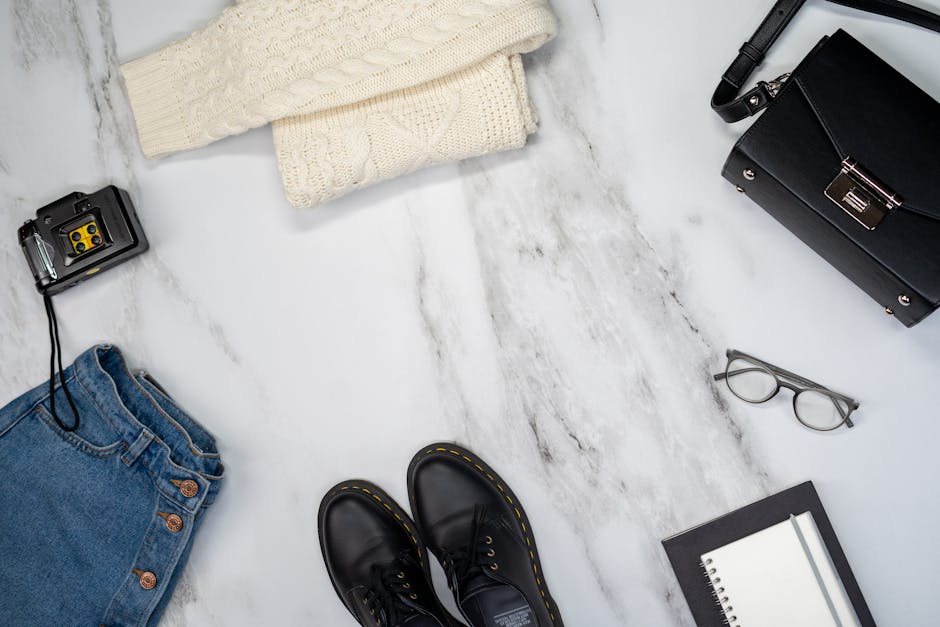
Every new piece you consider should work with at least four items you already own. Not three. Four. If it doesn’t clear that bar, it’s not a capsule piece — it’s the start of a separate wardrobe that requires additional buying to function. That’s the opposite of what a capsule is for.
How to Build Your Capsule Around Your Actual Lifestyle
Three lifestyle profiles cover most cases — and each shifts the priority list significantly enough to change which pieces deserve the investment.
What Should a Work-From-Home Wardrobe Prioritise?
Remote workers need comfort pieces that read as intentional on video calls. The blazer becomes situational — useful for occasional client meetings, not a daily staple. The formal event dress drops in priority too. What earns its place: well-fitted knits, clean straight-leg trousers in navy or dark grey, and a structured shirt that photographs well without looking stiff or corporate.
Two specific picks worth considering: Uniqlo’s ribbed crewneck knits (£30–£40) hold shape through frequent washing and photograph cleanly across video platforms. The Arket straight-cut Oxford shirt (around £65) survives regular machine washing without losing its structure. Both justify the spend for a WFH wardrobe where they’re worn three to four days per week.
What Does a Corporate-Ready Capsule Actually Need?
Office-heavy schedules shift the emphasis firmly toward tailoring. The core becomes two pairs of tailored trousers (navy and camel), two quality blouses or shirts, one structured blazer, and one dress that works underneath the blazer. Shoes become a load-bearing decision — a low-heeled leather court shoe like M&S’s Comfort Insole range (around £45–£65) covers formal days without the foot fatigue of a full heel across back-to-back meetings.
The piece most corporate capsules skip and later regret: a wrinkle-resistant blazer. Reiss’s structured double-crepe blazers hold their shape through a full working day without pressing. For a wardrobe that moves between commuting and high-visibility meetings, that matters more than adding a third blouse.
What’s the Right Core List for a Casual-First Wardrobe?
When the primary contexts are home, social, and errands, the capsule centres on well-fitting denim, quality tees, and versatile knitwear. The investment piece is jeans, not a blazer.
The Agolde 90s Pinch Waist jean (around £190) is the benchmark in this category. The denim weight — around 12oz — means it holds structure through a full day rather than going limp by early afternoon. The fit reads as deliberate rather than just comfortable. If that price point doesn’t work, Nobody’s Child’s straight-leg Darcy Jean (around £49) is the most credible alternative at the lower tier. The fabric is lighter but the silhouette is clean, and the rise works well across different body proportions without requiring tailoring.
The Colour Strategy That Determines Whether Your Capsule Actually Functions
Get this wrong and the individual pieces become irrelevant.
A capsule built around three base colours — one dark (navy, black, or charcoal), one light (white, cream, or light grey), and one mid-tone (camel, rust, or olive) — produces more outfit combinations than one with seven neutrals that only half-relate to each other. Three colours that all work together create a larger functional outfit matrix than six colours with inconsistent relationships. This isn’t aesthetic theory. It’s combinatorics.
How to Add an Accent Colour Without Collapsing the System
One accent colour for personality is reasonable. The practical rule: make it a natural extension of an existing base tone. Burgundy extends from camel and brown. Forest green extends from olive. Cobalt extends from navy. If your accent colour doesn’t extend from a base you already have, you’ll need additional bridge pieces to make it connect — which expands the wardrobe rather than concentrating it.
Which Brands Build Colour-Consistent Ranges Worth Shopping Across Seasons
COS builds seasonal collections around internally consistent palettes, making it unusually easy to buy pieces across different seasons and have them integrate. Arket and Massimo Dutti operate similarly. These aren’t the cheapest options — COS blazers start around £150, Massimo Dutti tailoring runs £80–£200 — but the colour coherence across their ranges reduces the risk of buying a piece that visually isolates itself from everything else you own.
For budget-conscious shoppers, the practical approach is to use these brands as a colour reference system, then match their seasonal palettes at lower price points through Zara or & Other Stories, which tend to track similar colour directions at more accessible prices.
Summary: Capsule wardrobe priorities by lifestyle
| Lifestyle | Priority Pieces | Lower Priority for Now | Estimated Core Budget |
|---|---|---|---|
| Work-from-home | Quality knits, clean trousers, structured shirt | Formal blazer, heels, event dress | £300–£600 |
| Corporate office | Tailored trousers, structured blazer, low-heel leather shoe | Heavy casual denim, graphic tees | £500–£900 |
| Casual-first | Dark jeans, quality fitted tees, knit layers | Formal event dress, corporate blazer | £200–£450 |
| Mixed (3+ contexts) | All 10 core pieces — full capsule applies | None — all pieces earn their place | £600–£1,200 |