
You leave home in a soft sweater, pull on your coat, and find that the sleeves bunch at your elbows before you reach the train. By lunch, the knit has stretched at the shoulders, your scarf has created a lump under the collar, and the coat looks two sizes too small. The problem is not the sweater. It is the space between the sweater and the coat.
The winning January formula is a fine-gauge knit under a coat with clean shoulder lines, enough chest room, and a sleeve that covers the wrist without swallowing the hand. That combination keeps an office outfit warm outside and polished inside. The guidance below focuses on fit, fabric, movement, and the specific mistakes that make winter workwear feel awkward.
Build the January office outfit from the inside out

The four-step order that prevents a bulky silhouette
- Start with a smooth base. A thin cotton-modal camisole or lightweight long-sleeve top reduces friction between the knit and your skin. It also stops the sweater from absorbing deodorant or foundation at the neckline.
- Choose one soft layer. Pick a fine merino crew, a slim cashmere pullover, or a lightweight mock neck. Do not stack a shirt, thick cardigan, and scarf under a fitted coat unless the coat was designed for that amount of room.
- Keep the knit hem controlled. The sweater should finish at the high hip or sit cleanly under the waistband. A long, loose hem under a short coat creates a second horizontal line and makes the torso look wider.
- Add the coat last. Close every button or zip, walk for two minutes, sit in a chair, and reach forward as if you are taking a laptop from a bag. The outfit passes only if the coat remains comfortable in all four positions.
The January office test
Wear the full outfit for ten minutes indoors before leaving home. Sit at a desk. Type. Put on your bag. If the coat sleeve keeps riding upward, the knit is too thick or the armhole is too narrow. If the collar feels crowded, remove the scarf before changing the coat. Many winter outfits fail because three necklines compete for the same small area.
Keep the visual line simple. A high-neck knit works best with an open coat lapel and no bulky scarf. A crew neck can take a narrow scarf or a shirt collar. A cardigan with visible buttons needs a coat with a plain front, or the chest starts to look busy. These are small choices, but they make a soft outfit look deliberate instead of padded.
Which coat shapes work best over soft office knits?
The best shape is not always the warmest-looking shape. A coat with a straight body and enough room through the upper arm usually layers better than a heavily tailored coat with a narrow waist. Use the chart as a buying filter, then judge the actual garment by its shoulder and sleeve construction.
The clear winner for most offices
Choose the straight wool topcoat if you want one coat that handles trousers, dresses, and soft knit separates. Its clean front makes the outfit look sharper, while the extra chest room protects the sweater from being crushed. A knee-length hem also covers more of the outfit and reduces the need for a bulky scarf.
When a raglan coat is the smarter choice
Pick a raglan sleeve if shoulder comfort matters more than a crisp tailored line. The diagonal seam gives your upper arm more space, which helps with brushed wool, alpaca blends, and relaxed cardigans. The tradeoff is shape. Balance the roomy coat with straight-leg trousers, a narrow skirt, or a neat boot so the outfit still has a visible line.
My product picks for the coat-and-knit problem
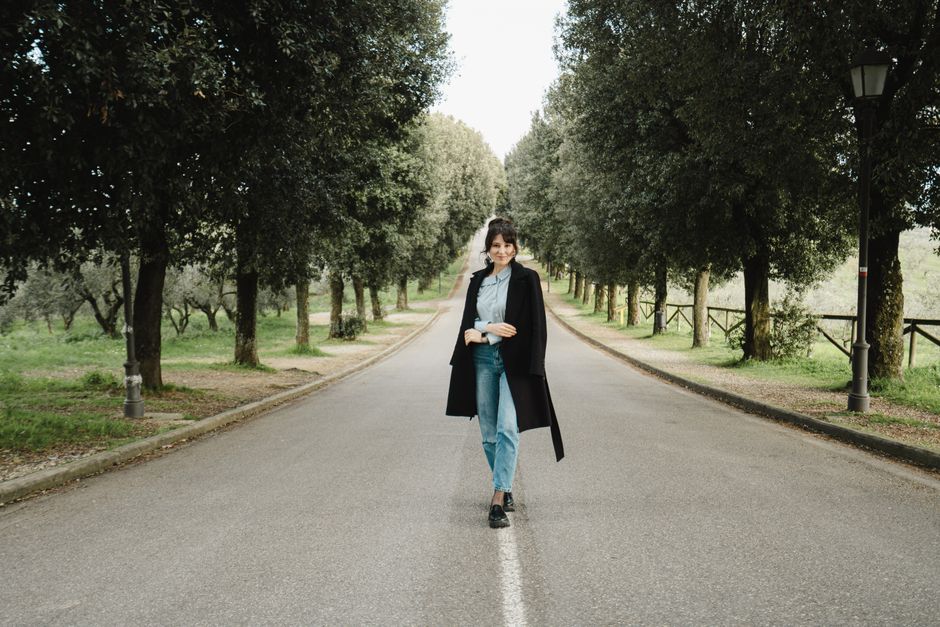
Sale pricing moves, so treat those figures as a 2026 reference rather than a promise. The important detail is the shape: it gives a soft office knit a cleaner frame without forcing you into a boxy oversized coat.
The best knit layer for a polished commute
For a smooth base, the Uniqlo Cashmere Crew Neck Sweater is the simplest choice. The 100% cashmere construction gives warmth without the raised surface of a chunky brushed sweater. Choose a size that skims the body rather than one that hangs loose. The coat should provide the extra room.
The Quince Mongolian Cashmere Crewneck Sweater is the value pick when you want a soft knit for repeated office wear. It is not the right choice for rough bag straps or a desk drawer full of Velcro, because cashmere can pill with friction. Wear it under a smooth coat and carry the bag on a structured handle when possible.
The coat upgrade for a softer, less formal look
The COS Double-Faced Wool Coat works for people who dislike the sharp shoulder and narrow waist of a traditional topcoat. Its double-faced wool construction gives the fabric a fluid drape, while the relaxed cut leaves more room for a fine cardigan. It is the better pick for a creative office or a wardrobe built around wide-leg trousers. It is not my first choice for heavy rain or long outdoor waits because a soft wool coat is not a waterproof shell.
For a budget-conscious wardrobe, buy one reliable coat and two knit weights instead of three similar sweaters. Pair a fine merino crew with the J.Crew Daphne for cold commutes, then use the lighter knit indoors when the office heats up. That system solves more outfits than buying a very large coat to accommodate every possible sweater.
Questions to settle before January shopping

How much room should a coat have over a sweater?
Use your thickest regular office knit as the fitting layer. Close the coat and check for pulling across the chest, the upper back, and the button placket. You should be able to slide a flat hand between your body and the coat at the chest, but the coat should not balloon when you stand still. The J.Crew Daphne topcoat is the strongest all-purpose example here because its topcoat shape gives a fine knit a clean outline. For a chunkier cardigan, a raglan or relaxed coat will be more comfortable.
Should the coat match the knit?
No. Match the level of formality instead. A charcoal merino sweater works with a camel wool coat, a navy topcoat, or a black car coat because the colors are quiet and the textures stay controlled. If the knit has visible cables, brushed fibers, or a bold pattern, keep the coat surface plain. The Quince Mongolian Cashmere Crewneck is easy to pair because its smooth finish does not compete with a herringbone, check, or textured wool coat.
What is the warmest combination that still looks professional?
Use a thin base layer, a fine merino or cashmere knit, a straight wool coat, and a narrow scarf. Add warmth at the hands and feet with lined gloves and wool socks rather than piling more fabric around the torso. The Uniqlo Cashmere Crew Neck is useful in this setup because it adds insulation without the visual weight of a chunky pullover. If you need true weather protection, wear a compact shell over the wool coat for the walk and remove it at the office.
What should the final outfit look like?
Return to the January morning: soft sweater, cold platform, crowded train, warm office. The answer is a smooth knit with controlled volume under a coat that has room at the chest and movement at the arm. Choose the straight wool topcoat for the most polished result, a raglan coat for comfort, and the smallest knit that keeps you warm indoors. Your coat should close easily, your cuffs should stay covered, and your outfit should still look intentional after the commute.