The misconception is that you need a specific body type, a bigger budget, or some innate style sense to pull off outfits from Pinterest. You don’t. What’s actually missing is the translation layer — the decisions that happen between saving a pin and getting dressed in the morning.
Here’s the real scenario. You’ve saved 40 pins. Slim chinos, tucked Oxford shirts, white leather sneakers, clean lines. You open your closet and nothing clicks. Same person, same clothes, completely different result. That gap isn’t about taste. It’s about information Pinterest leaves out of the frame.
Why Saved Pins Don’t Automatically Become Outfits
Most men’s outfit photos on Pinterest share a few unstated conditions: professional or flattering natural light, a model whose build happens to fill the clothes the way the brand intended, and a photographer who chose the angle, the crop, and the context. The “effortless” look in a pin is often the result of deliberate effort — it’s just invisible by the time you see the image.
That doesn’t mean the outfits are unachievable. It means there’s context missing, and that missing context is what you need to fill in.
Foundation Pieces Are Invisible in Photos
Pinterest pins almost always center on the statement piece — the interesting jacket, the textured trouser, the unusual shoe. What doesn’t appear in the photo is the neutral wardrobe underneath that makes the statement piece work. A Carhartt WIP Detroit Jacket ($170) looks like a Pinterest outfit because it’s worn over a plain white tee and straight-leg dark jeans. Remove the plain tee, add a graphic shirt, and the whole thing collapses.
The foundation — neutral basics, clean colors, correct fit — does the heavy lifting in every outfit you’ve saved. It just doesn’t photograph as interestingly as the outerwear layer, so nobody talks about it.
Fit Is the Invisible Variable
The same pair of Levi’s 501 jeans looks like a Pinterest outfit on one person and like hand-me-downs on another. The difference is almost always fit, not style. Pinterest features people whose bodies happen to fill clothes as the manufacturer designed them — or who had pieces altered before the shoot.
A $20 trouser taper at a local tailor does more than a $150 new purchase. This sounds obvious. Most men still skip it.
Color Accuracy in Photos Lies
Beige reads as cream in direct sunlight. Navy looks black in a smartphone photo. When you try to match or contrast colors based on a pin, you might be working from inaccurate data. The actual outfit might use more contrast than it appears — or less. Check the brand’s product page for accurate color information before buying pieces to coordinate with something you saw on a screen.
Pinterest is still one of the most useful tools for identifying silhouettes, proportions, and outfit combinations. The fix is learning to reverse-engineer what you’re actually seeing, not copying it image by image.
The 5 Men’s Outfit Formulas Pinterest Actually Uses

Stop saving individual outfits. Start saving formulas. A formula works across body types and budgets because it’s built on proportion and contrast — not on owning one specific piece from one specific brand.
| Formula | Core Pieces | Best Occasion | Realistic Budget |
|---|---|---|---|
| Smart Casual | Slim chinos, tucked Oxford shirt, white leather sneaker or loafer | Dates, casual Fridays, dinners | $120–$250 |
| Streetwear Core | Straight-leg jeans, oversized tee, New Balance 574 or 550 | Weekends, concerts, city errands | $90–$200 |
| Minimalist European | Tailored trousers, plain tucked tee, derby shoe or minimal sneaker | Travel, creative offices, galleries | $150–$380 |
| Workwear Casual | Carhartt WIP or Dickies trousers, white tee, Dr. Martens 1460 | Weekends, layering season, outdoor plans | $110–$230 |
| Coastal Prep | Linen trousers, striped tee, tan leather sneaker, no-show socks | Summer, outdoor events, travel | $90–$210 |
The Smart Casual formula is the most-pinned for a reason. It photographs well, covers the widest range of occasions, and is the most forgiving of body type variation. If you’re starting from zero, build this one first.
Which Formula Actually Fits Your Life
The Workwear Casual formula is the most tolerant of execution errors. The color palette is nearly automatic — dark trouser, white or olive tee, brown or black boot — and the pieces are durable enough to repeat without looking like you’re repeating. The Minimalist European formula carries the highest failure risk: one piece with bad fit and the outfit reads as unfinished rather than intentional. Don’t start there until you’ve handled your tailoring.
The Foundation Wardrobe Before Any Trend Purchase
Buy these before any trend-driven item. Every Pinterest outfit you’ve saved is built on at least three of the following pieces. The interesting item on top adds personality to an already-functioning outfit — it doesn’t create one from nothing.
- Straight-leg or slim-straight jeans in dark indigo or black. The Levi’s 511 ($80) is the slim-straight default. The Levi’s 501 ($98) gives a slightly more relaxed straight leg. Either covers the Streetwear Core and Workwear Casual formulas completely. Skip skinny. Skip wide-leg until you have everything else working.
- Two Oxford shirts — one white, one light blue. The Uniqlo Oxford Button-Down ($30) is one of the most reliable pieces in men’s fashion at any price point. Ralph Lauren’s Oxford shirt ($89) photographs better and lasts longer. White is the default layer. Light blue reads as slightly more deliberate and works well under a jacket or unstructured blazer.
- Neutral chinos in stone, beige, or olive. Uniqlo slim-fit chinos ($40) are the correct starting point at this budget. Gap’s Khakis work in the same price range. These replace jeans in the Smart Casual and Coastal Prep formulas without requiring any other change to the outfit — the formula stays intact, the vibe shifts slightly.
- One white leather sneaker. The Adidas Stan Smith ($90) is the standard. Common Projects Achilles Low ($450) is for people who prioritize this category specifically. The COS leather sneaker ($130) sits in the middle and performs better than its price suggests. Avoid white sneakers from fast-fashion brands — they yellow within a few months and undercut the rest of the outfit.
- A structured outer layer. The Carhartt WIP Detroit Jacket ($170) appears more consistently in men’s outfit pins than almost any other single piece, because it works over everything and reads as intentional without effort. For a more formal direction, a simple navy blazer from COS ($195) or Zara ($89) covers the Smart Casual and Minimalist European formulas in cooler weather.
Total to build this foundation: $300–$650 depending on brand choices. After this, every trend piece or statement item you add will actually function — because the outfit underneath already works.
The Single Thing That Kills Every Pinterest-Inspired Outfit

Fit. Not brand, not budget, not color. Fit alone explains why the same pieces look like a deliberate outfit on one person and a pile of clothes on another. Get what you already own altered before buying anything new. A $25 shirt taper and a $15 trouser hem will outperform your next three online purchases combined.
How to Shop Pinterest Looks Without Wasting Money on Wrong Pieces
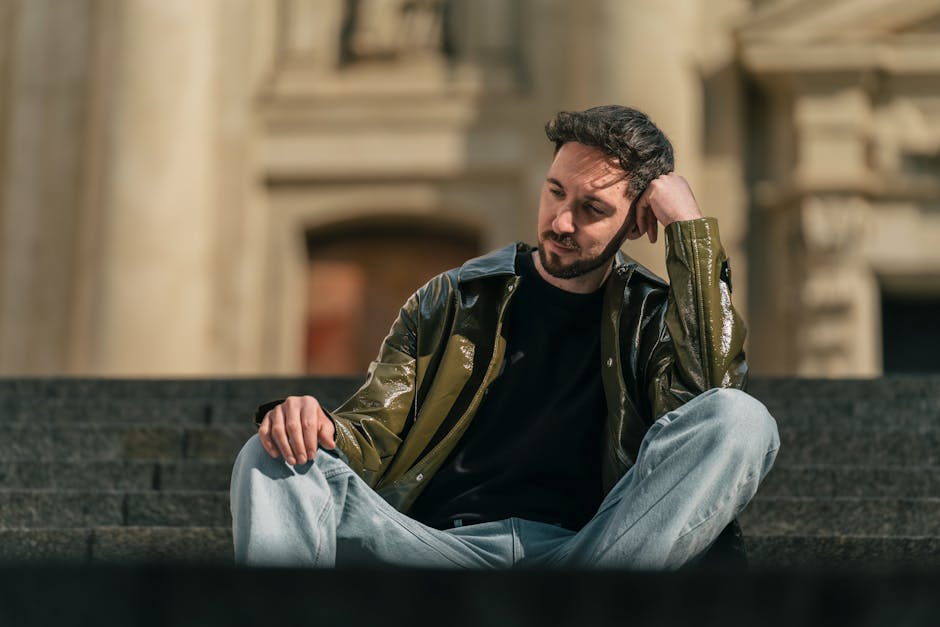
The practical problem with Pinterest isn’t finding inspiration — it’s executing without buying three incorrect versions of the same item first.
Do you actually need the exact piece from the pin?
No. Trying to find the exact item is where most men lose time and money. Pinterest photos frequently feature pieces that are already sold out, from small brands that don’t ship internationally, or from lookbooks that were never consumer-facing. What you need is the silhouette and the approximate color — not the specific SKU. Search for “slim tapered chino in stone” and you’ll get viable results from ASOS, Zara, COS, and Uniqlo simultaneously. Match the shape and color. Let the brand be a secondary consideration.
Where do the most-pinned men’s pieces actually come from?
The most-pinned men’s items cluster predictably around a small number of brands. Zara covers trend-forward pieces at low commitment prices. COS handles minimalist pieces with better fabric construction than Zara, at a higher price and longer lifespan. Uniqlo owns basics and neutral foundations. ASOS Design covers more experimental silhouettes affordably. Norse Projects is where quality and aesthetic fully align for the upper-mid budget — their pieces appear in pins repeatedly because they photograph well year after year, not just for one season.
Carhartt WIP and New Balance keep appearing because they’re not driven by trend cycles. A piece that photographs well in 2026 still looks right in 2026 when its aesthetic is built on utility and proportion rather than a microtrend.
What’s the right order of purchases on a limited budget?
Jeans first ($80–$98, Levi’s 511 or 501), then two Oxford shirts ($30–$60 total from Uniqlo or Ralph Lauren), then one pair of chinos ($40, Uniqlo), then a white leather sneaker ($90, Adidas Stan Smith). That’s $240–$290 total and covers three of the five formulas in the table above. Add a Carhartt WIP Detroit Jacket when you have another $170 and the Workwear Casual formula is complete too.
Trend pieces come after this foundation — not before. The specific recommendation: start with the Smart Casual formula using Uniqlo basics and Levi’s 511s in dark indigo. One pair of jeans, two shirts, one pair of chinos, one white sneaker. That’s the outfit you’ll actually wear consistently, and the base from which every other Pinterest formula you want to build can grow.